Karahan Tepe
Pre-Pottery Neolithic settlement in the Şanlıurfa region, with domestic areas, T-shaped pillars, carved figures, and communal buildings cut partly into the bedrock.
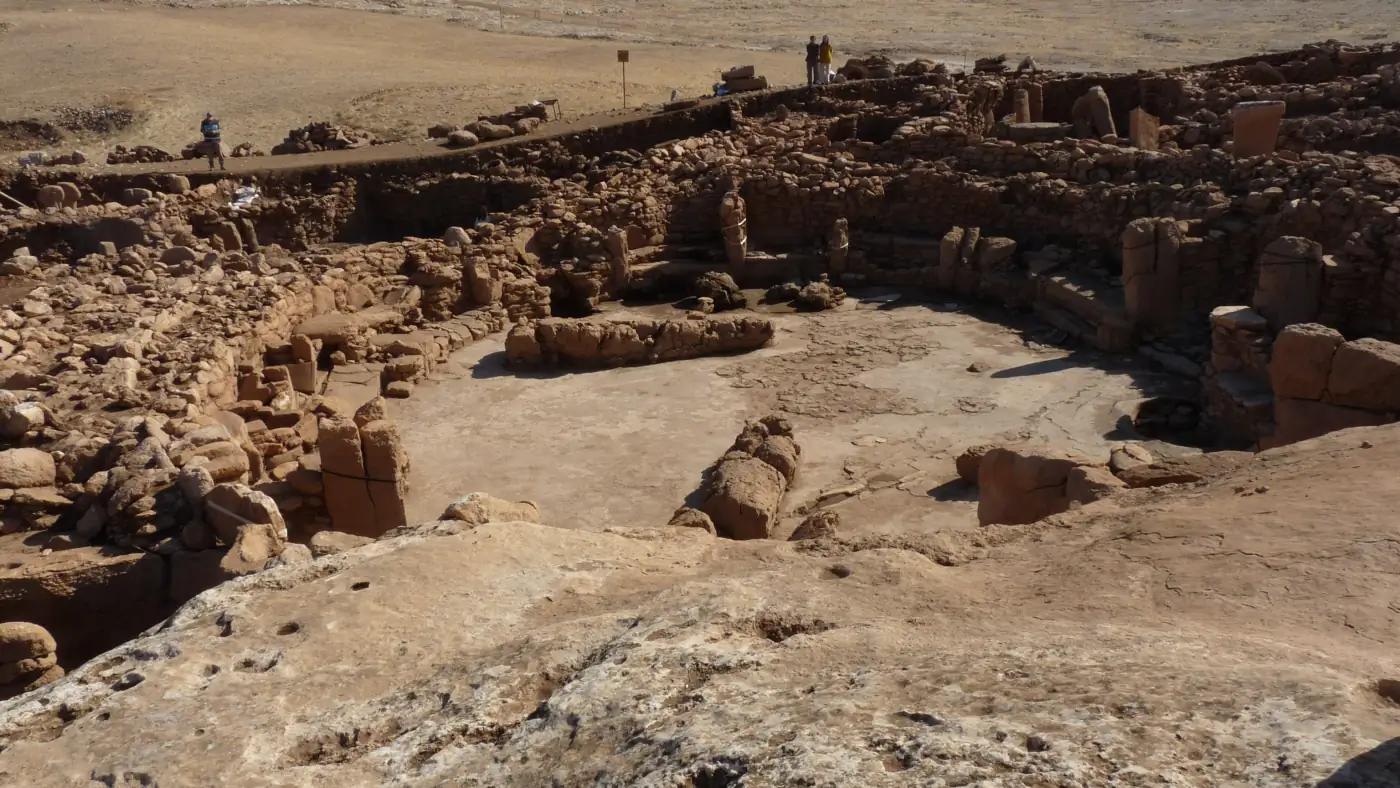
Karahan Tepe spreads across a limestone ridge east of Şanlıurfa in southeastern Turkey. Upright pillars, carved animals, human figures and buildings cut partly into bedrock place it within the remarkable group of early Neolithic sites now called Taş Tepeler, the Stone Hills.
The site is often introduced as a rival to nearby Göbekli Tepe or as a discovery that "rewrites history." Excavation tells a more interesting story. Karahan Tepe preserves several kinds of architecture within a settlement, including spaces that appear to have served different social and everyday purposes. It helps move the discussion away from a lone mysterious sanctuary and toward communities experimenting with permanent places, shared buildings and new ways of living together.
Before pottery and farming villages
Karahan Tepe belongs to the Pre-Pottery Neolithic, around the tenth and ninth millennia BCE. People in this region lived before ceramic vessels became common and while domesticated crops and animals were still developing. They hunted, gathered plants, worked stone and built structures that required planning and coordinated labour.
Older narratives treated farming as the force that produced permanent settlements, organised ritual and monumental architecture. Sites across the Şanlıurfa region show that the sequence was less tidy. Communities could build substantial places while much of their food still came from wild resources. Cultivation, domestication, mobility and settled life changed together over long periods.
Surface survey first identified large numbers of worked stones and T-shaped pillars at Karahan Tepe. Systematic excavation began in 2019 under archaeologist Necmi Karul and has revealed only part of a settlement extending across many hectares. Any interpretation remains provisional because most of the site is still underground.
Human-shaped pillars and carved rooms
T-shaped pillars are a repeated feature of Taş Tepeler sites. Some carry arms, hands, belts or clothing, making their human form clear even when they lack carved faces. They may have represented people, ancestors, powerful beings or categories for which no modern word is exact. Archaeology can document their placement and treatment more confidently than their names.
At Karahan Tepe, pillars stood within circular and rectilinear buildings. Carved snakes, birds, quadrupeds and human forms appeared on stone surfaces and portable objects. The imagery is not a decorative afterthought. It shaped how people moved through the architecture and encountered stone bodies in dim, enclosed spaces.
One striking rock-cut structure contains a sculpted human head facing a row of upright, phallic forms. A channel leads into the space, and steps controlled access. The arrangement has prompted interpretations involving initiation, masculinity, water, death or communal ceremony. None is proven. Its careful construction does show that the room was designed for actions different from ordinary circulation.
Nearby buildings broaden the picture. Excavated structures vary in size, plan and fittings. Some are described as special or communal buildings, while evidence from the wider settlement points toward residential life as well. Karahan Tepe was not simply an open-air sculpture gallery. Food preparation, craft, shelter and gathering belonged to the same inhabited landscape.
Why were buildings filled in?
Several excavated structures were deliberately filled with stone, earth and selected material. In the best documented examples, the sequence suggests an organised closing process rather than gradual collapse. Parts of buildings were dismantled, deposits were placed inside and the spaces were sealed.
The word burial is sometimes used for this practice because buildings appear to have been treated as entities with a social life and a formal ending. It is an analogy, not proof that people thought of architecture exactly as they thought of human bodies. Filling may have marked renewal, transferred memory to a new building, controlled access to an old place or combined several motives.
Deliberate closure also affects preservation. Sealed structures survived with pillars and carvings in positions that erosion or later reuse might otherwise have destroyed. Excavators must read the fill as evidence rather than remove it as meaningless rubble.
Karahan Tepe and Göbekli Tepe
The two sites share T-shaped pillars, animal imagery and early monumental construction, but one should not be treated as a copy of the other. Buildings differ in plan, carving and context. Excavation at Karahan Tepe has also strengthened the case that special structures and domestic life were connected within Neolithic settlements.
Claims that Karahan Tepe is definitively older than Göbekli Tepe go beyond the current evidence. Their chronologies overlap, and dating individual buildings requires secure samples and careful stratigraphy. A newly excavated structure can belong to an older phase without making the entire settlement older than every phase of another site.
Taş Tepeler is therefore valuable as a regional research programme. Comparing several settlements can show which practices were widely shared and which belonged to particular communities. It also reduces the temptation to make one spectacular site carry the whole story of Neolithic change.
A site still being uncovered
Karahan Tepe is unusually exposed to modern attention while excavation is continuing. New discoveries quickly become headlines, sometimes before detailed reports appear. Numbers of pillars, dates and interpretations can change between seasons.
Responsible presentation should leave room for that movement. The evidence already shows skilled stonework, coordinated construction and a densely meaningful built environment created by hunter-gatherer and early cultivating communities. It does not require secret technology or a forgotten civilisation.
The site's power comes from something more human. People carved limestone, shared food, entered carefully arranged rooms and decided when a building's life had ended. Karahan Tepe preserves those choices at a moment when communities across southwest Asia were reshaping the relationship between movement, settlement and memory.