001
Abu Simbel
Two rock-cut temples for Ramesses II. In the 1960s, the entire complex was sawed apart and relocated to escape Lake Nasser.
Read entryBrowse by form
Browse sanctuaries, sacred precincts, and ceremonial landscapes built for worship, procession, offerings, and encounters with the divine.
001
Two rock-cut temples for Ramesses II. In the 1960s, the entire complex was sawed apart and relocated to escape Lake Nasser.
Read entry
002
Largest religious structure ever built by area. A microcosm of Hindu cosmology, later converted to Buddhist use.
Read entry
003
Plain studded with over 2,000 surviving Buddhist temples. The kingdom that built it was sacked by Mongol forces.
Read entry
004
Pink sandstone temple with carving so fine and intricate it is sometimes called "the art gallery of Angkor."
Read entry216 carved stone faces stare from 54 towers at the centre of Angkor Thom. Whose faces, exactly, is still debated.
Read entry
006
Mahayana Buddhist temple of nine stacked platforms, abandoned for centuries beneath volcanic ash. Largest Buddhist monument in the world.
Read entry
007
Chola dynasty temple in Thanjavur. Its 80-tonne capstone was reportedly hauled up a six-kilometre earthen ramp.
Read entryTruncated pyramid temple on the slopes of Mount Lawu. Erotic reliefs and Mesoamerican-looking architecture in central Java.
Read entry
009
Andean ceremonial centre with a network of stone galleries beneath. The Lanzón monolith stands inside, never exposed to sunlight.
Read entry
010
Best-preserved Elamite ziggurat. Built by Untash-Napirisha, then partially destroyed by Ashurbanipal of Assyria.
Read entry
011
Only surviving Greco-Roman colonnaded structure in the former Soviet Union. Toppled by an earthquake in 1679, rebuilt in the 1970s.
Read entry
012
Older than Stonehenge and the pyramids. Megalithic temples on Gozo built when, by legend, giants walked the islands.
Read entry
013
T-shaped megalithic enclosures predating agriculture, pottery, and writing. Deliberately buried by its builders around 8000 BCE.
Read entry
014
Built from globigerina limestone, including a single block weighing 20 tonnes. Now sheltered beneath a tensile membrane roof.
Read entry
015
Justinian's basilica. Cathedral, mosque, museum, mosque again. The dome's design baffled engineers for centuries.
Read entry
016
Largest temple in ancient Korea, with a nine-storey wooden pagoda 80 metres tall. Burned by the Mongols in 1238.
Read entry
017
Sandstone butte with a freestanding pinnacle, sacred to Egyptians and Kushites alike. Temples to Amun cut into its cliff base.
Read entry
018
Sister site to Göbekli Tepe. A subterranean chamber holds 11 monolithic pillars carved out of bedrock.
Read entry
019
Largest religious complex ever built. The Hypostyle Hall contains 134 columns, some 21 metres tall. Constructed across 2,000 years.
Read entry
020
Cluster of Hindu and Jain temples covered in intricate sculpture, including the famously erotic carvings on the outer walls.
Read entry
021
Stone chariot of the sun god Surya, drawn by seven horses on twelve carved wheels. Each wheel is also a working sundial.
Read entry
022
Built primarily by Amenhotep III and Ramesses II. Connected to Karnak by an avenue of sphinxes recently fully excavated.
Read entry
023
Pallava-era seaside temples and rock-cut monuments, including Arjuna's Penance, one of the largest open-air bas-reliefs in the world.
Read entry
024
Hindu temple complex of the Champa kingdom. Heavy bombing damage during the Vietnam War levelled the central tower group.
Read entry
025
Hadrian's reconstruction of an earlier temple. The world's largest unreinforced concrete dome for 1,300 years.
Read entry
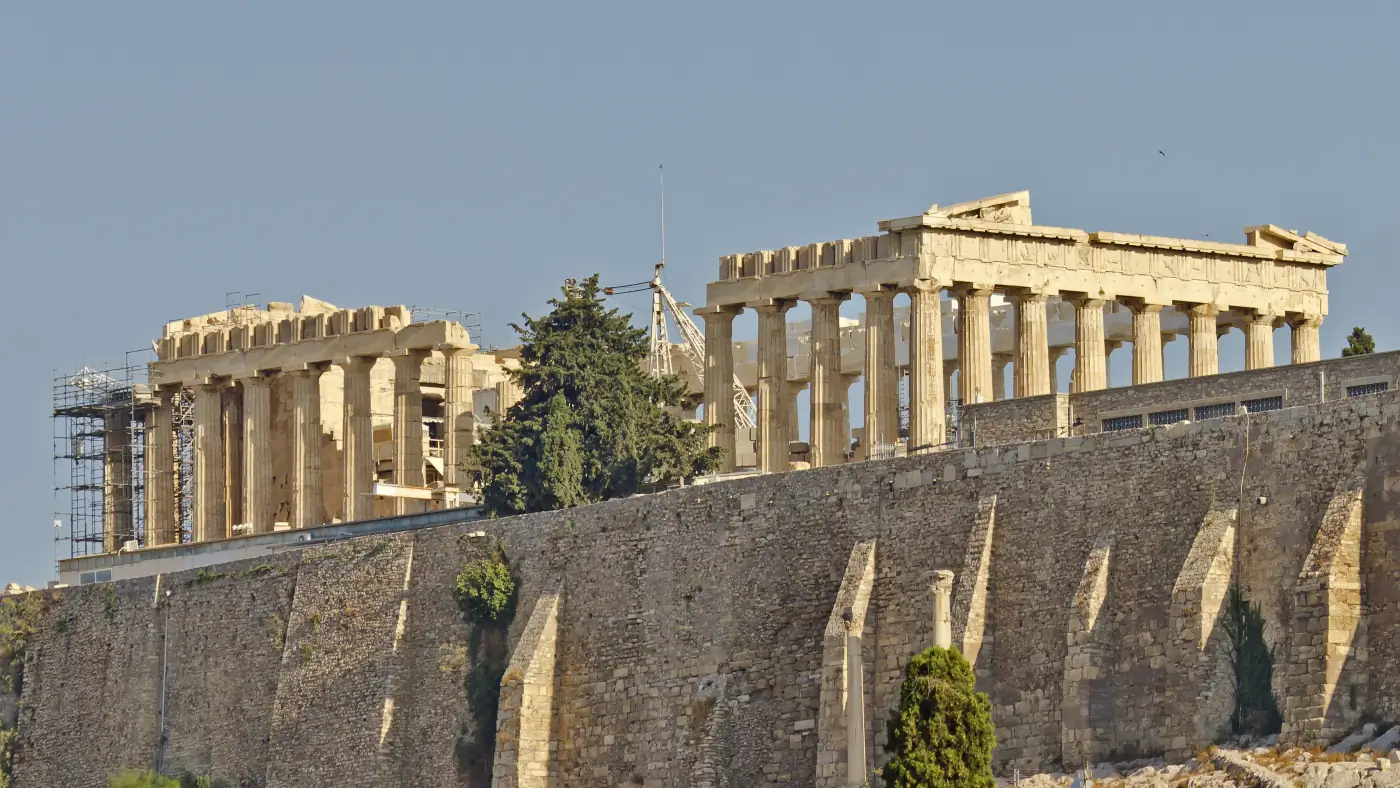
026
Temple of Athena Parthenos atop the Acropolis. Damaged by Venetian artillery in 1687 when it served as an Ottoman gunpowder store.
Read entry
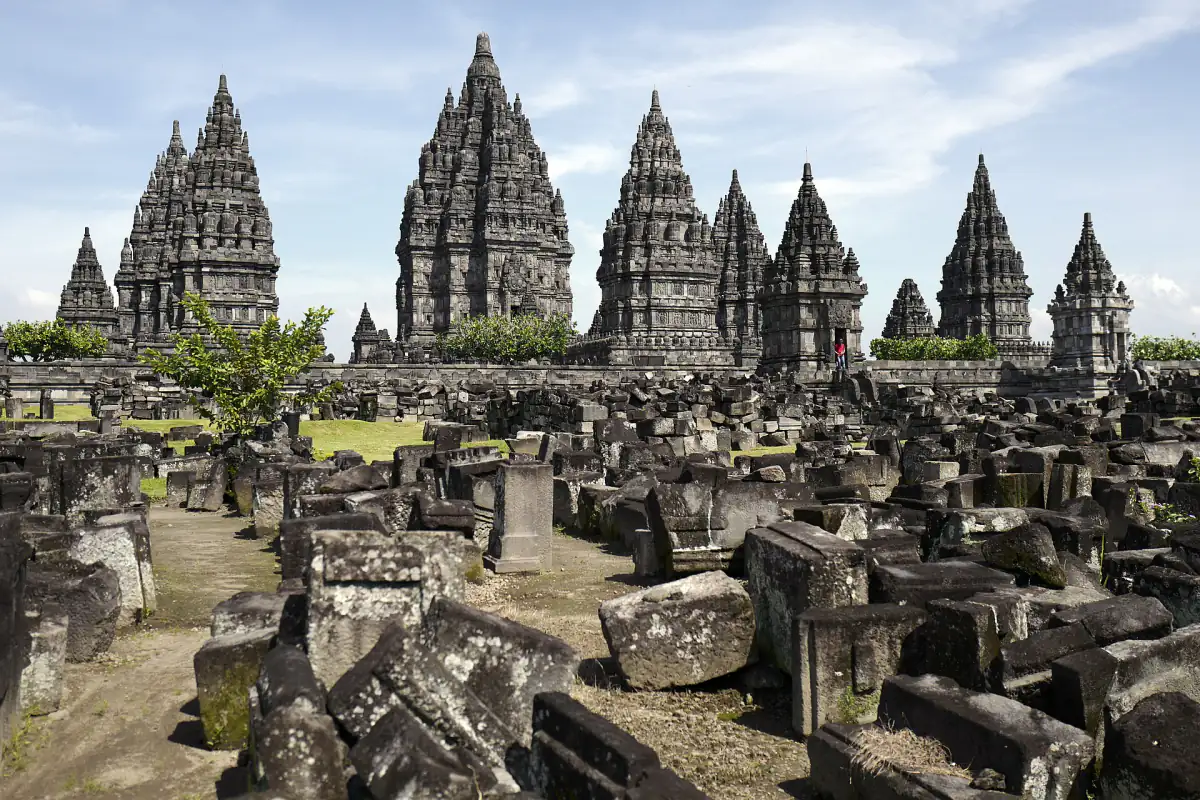
027
Trio of Hindu spires dedicated to Shiva, Vishnu, and Brahma. Toppled by an earthquake in the 16th century, partially restored.
Read entryEarliest surviving Buddhist stone monument, commissioned by Ashoka. The dome is encircled by gateways carved with scenes from the Buddha's life.
Read entry
029
Granite cave temple containing one of the finest Buddha images in East Asia, oriented to face the sunrise over the East Sea.
Read entry
030
Limestone temple east of the Sphinx, built from blocks weighing up to 100 tonnes. Never finished, function debated.
Read entry
031
Khmer temple intentionally left swallowed by silk-cotton trees. Roots and stone are now structurally inseparable.
Read entry
032
Seat of the Pythia, oracle of the ancient world. Built atop a fissure venting hydrocarbon gases, possibly the source of her trances.
Read entry
033
One of the Seven Wonders. Burned by an arsonist in 356 BCE on the night Alexander the Great was born. A single column survives.
Read entry
034
Mortuary temple of Egypt's most successful female pharaoh, terraced into the cliffs of Deir el-Bahari.
Read entry
035
Construction took over 600 years. Once the largest temple in Greece; only fifteen of its 104 colossal columns remain standing.
Read entry
036
Eight surviving columns at the western end of the Forum. Once held the Roman state treasury.
Read entry
037
Stepped pyramid covered in carvings of feathered serpents and storm-gods. Excavations beneath revealed sacrificial burials.
Read entry
038
Aztec capital and twin pyramid, dismantled by the Spanish to build Mexico City on top of it. Excavated since 1978.
Read entry
039
Granite-and-alabaster temple beside the Sphinx, where Khafre's body was prepared for burial. Some of the largest dressed stones in any Egyptian structure.
Read entry
040
Maya city above an oxbow bend in the Usumacinta. Famous for its carved limestone lintels with hieroglyphic narratives.
Read entry
041
Three-tiered Armenian cathedral that collapsed in the 10th century. Its ruined drum was the inspiration for the cathedral of Ani.
Read entry