001
Ai-Khanoum
Hellenistic city on the Oxus River, possibly founded by Alexander's successors. Looted heavily during the Soviet–Afghan war.
Read entryBrowse by form
Explore capitals, ports, ceremonial centres, and urban settlements whose streets, walls, palaces, and workshops still reveal how ancient communities lived.
001
Hellenistic city on the Oxus River, possibly founded by Alexander's successors. Looted heavily during the Soviet–Afghan war.
Read entry
002
Minoan town buried by the Theran eruption. Frescoes and three-storey houses preserved beneath metres of ash.
Read entry
003
Capital of one of antiquity's four great powers. Stelae carved as multi-storey monolithic buildings mark royal tombs.
Read entry
004
A Roman municipium at present-day Šćitarjevo near Zagreb, where excavations reveal streets, baths, houses, and a settlement shaped by the Sava River.
Read entry
005
Sinhalese capital for over a millennium. Houses the Sri Maha Bodhi, grown from a cutting of the Bodhi tree under which the Buddha attained enlightenment.
Read entry
006
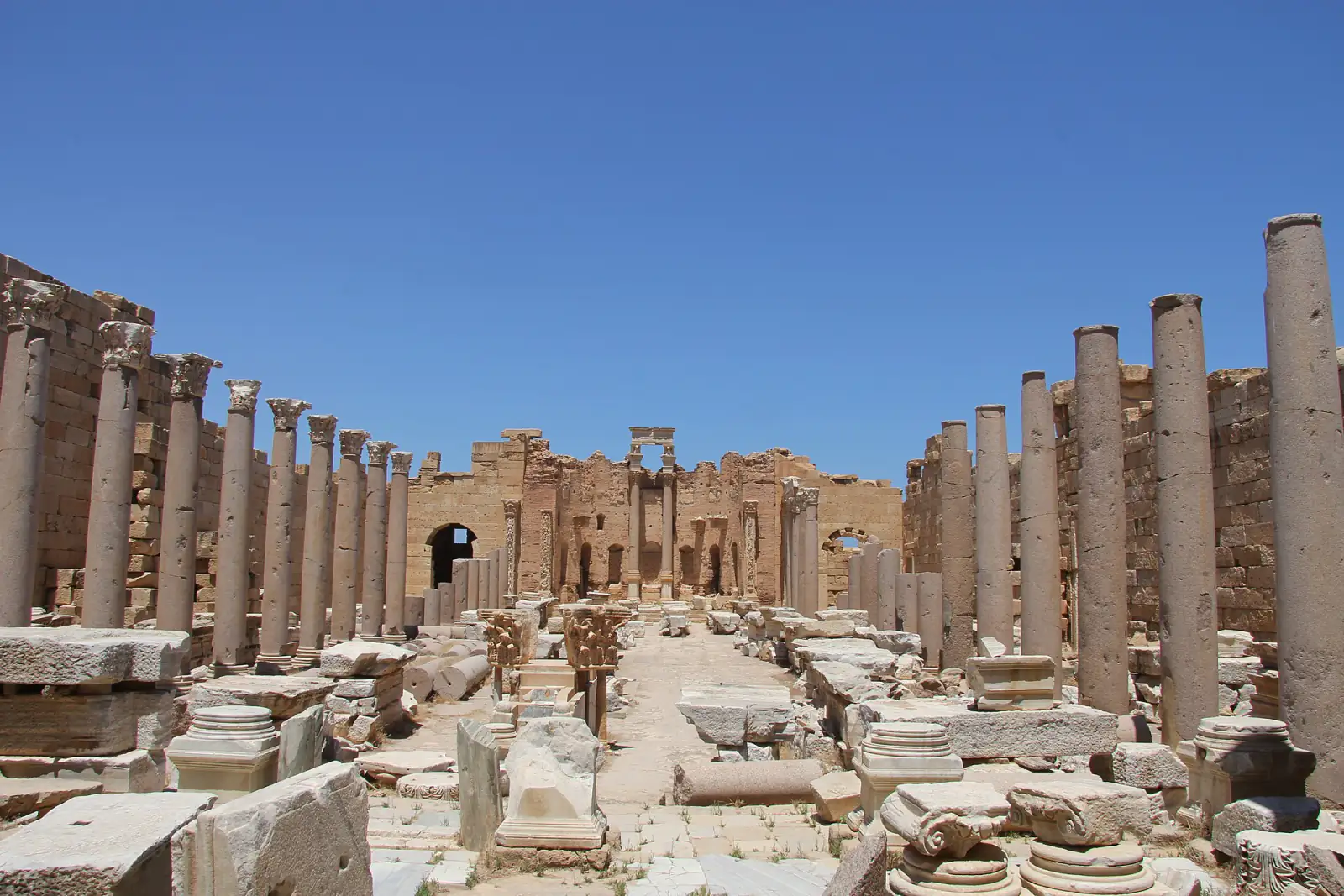
Hellenistic and Roman city with a colonnaded street nearly 2 km long. Heavily looted during the recent civil war.
Read entry
007
Greek-Roman city with a stadium for 30,000 and a school of marble sculpture supplying the empire.
Read entry
008
A fortified Bronze Age settlement in the southern Urals, built from two rings of dwellings with defensive walls, a ditch, workshops, and planned entrances.
Read entry
009
A Liburnian settlement near Benkovac that became a Roman town, preserving massive walls, gates, cemeteries, inscriptions, and traces of changing local power.
Read entry
010
Siamese capital razed by a Burmese army in 1767. A buddha head, swallowed by fig roots, became its iconic image.
Read entry
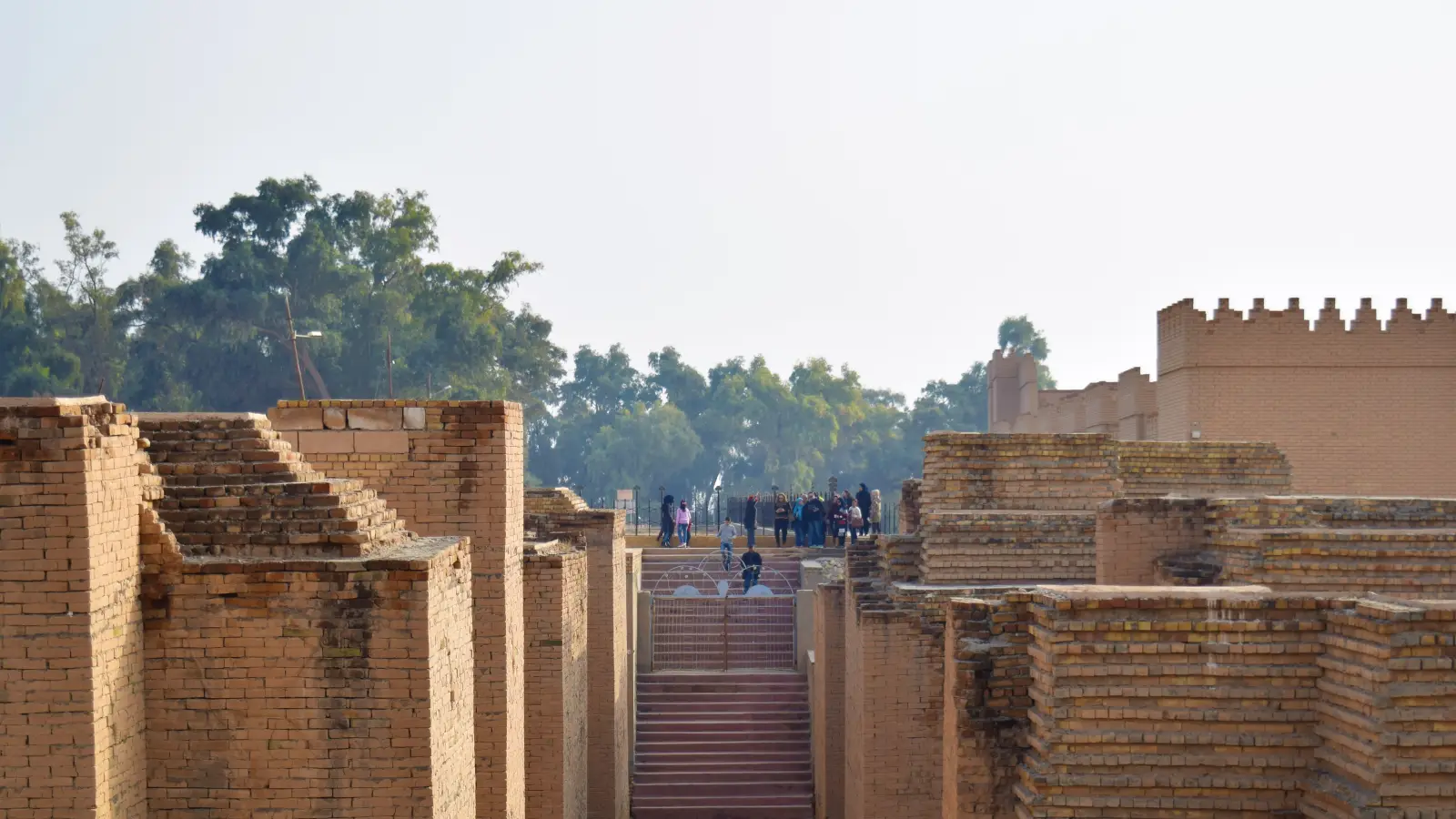
011
Mesopotamian capital under Hammurabi and Nebuchadnezzar II. Severely damaged by US military base construction in 2003–2004.
Read entry
012
Three rooms of vivid Maya murals depicting court life, battles, and the bloodletting of captives.
Read entryOne of the oldest continuously inhabited cities in the world. The Phoenician alphabet that became ours took shape here.
Read entry
014
Phoenician maritime power, demolished by Rome in 146 BCE. Rebuilt as a Roman city, sacked again, rebuilt again.
Read entry
015
Neolithic town entered through the roof. No streets between houses, neighbours simply walked across rooftops.
Read entry
016
Largest pre-Columbian city in the Americas, built entirely of adobe. Walls bear repeating patterns of seabirds and waves.
Read entry
017
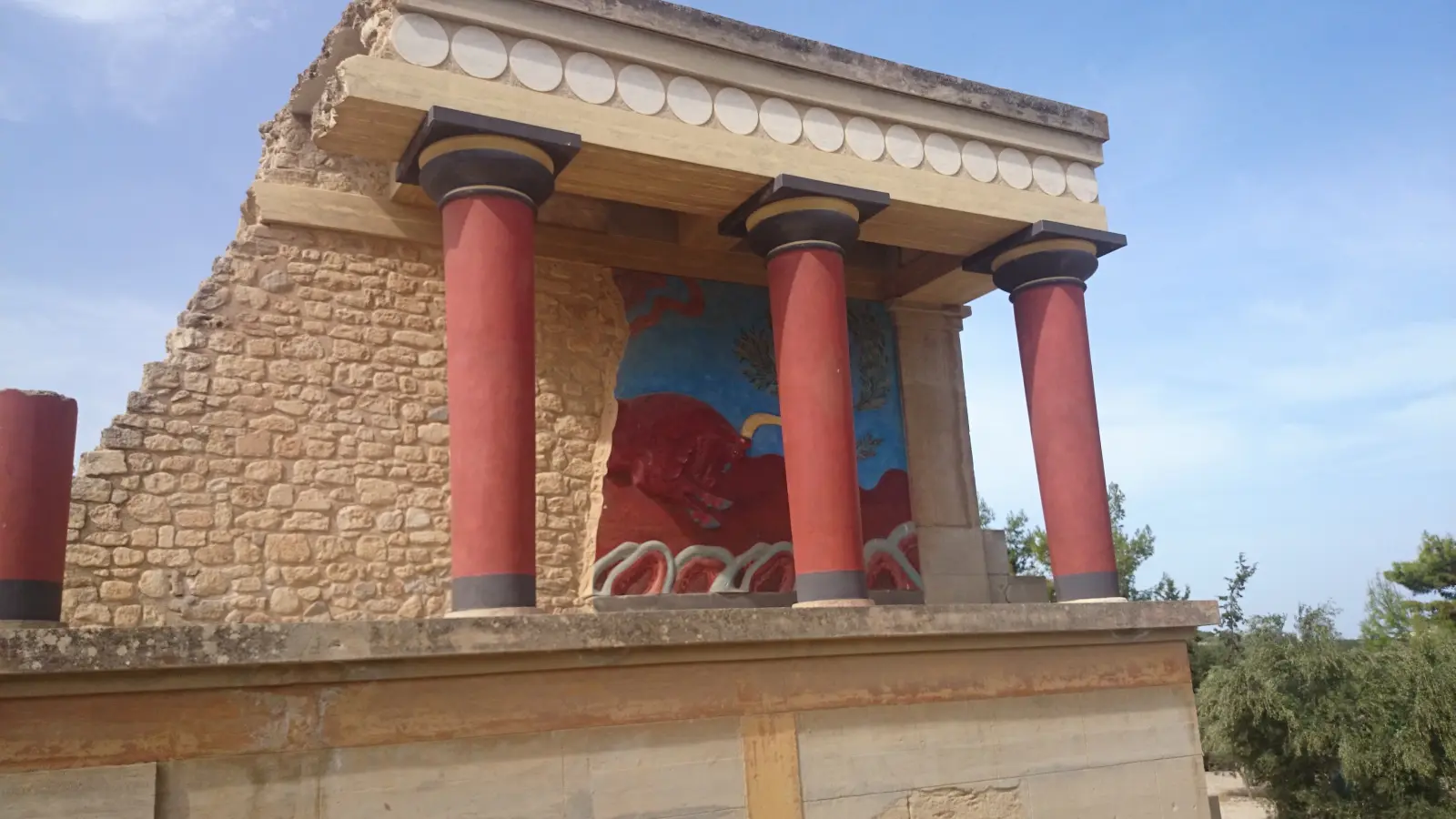
A Greek-founded city in Crimea with an orthogonal plan, vineyard land, public buildings, Roman and Byzantine layers, and a long urban life.
Read entry
018
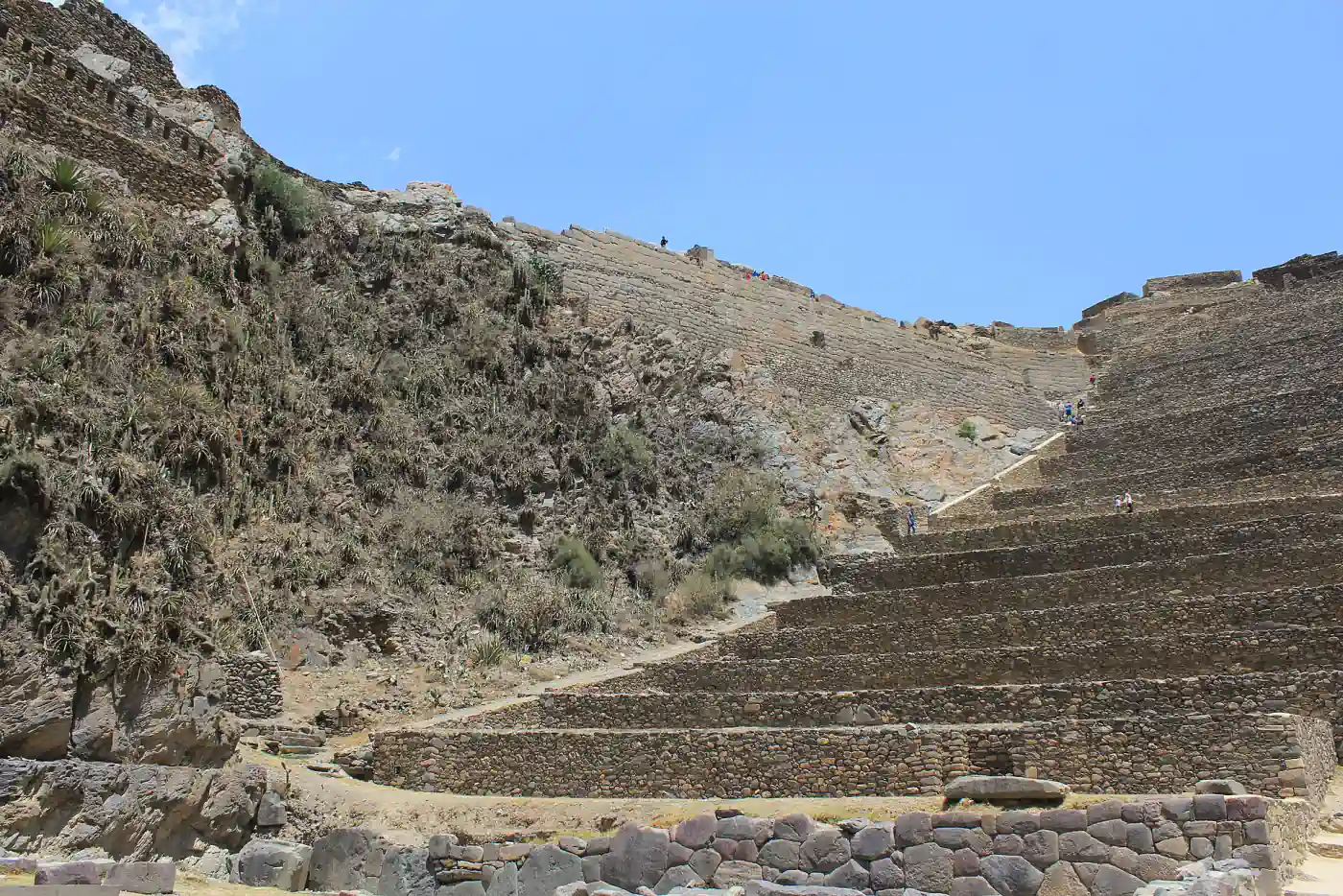
Inca city often called Machu Picchu's sister. Reachable only by a two-day hike, and only about 30% excavated.
Read entry
019
Maya city near the modern Honduran-Guatemalan border. Its Hieroglyphic Stairway is the longest known Maya text.
Read entry
020
Greek colony in eastern Libya. The Sanctuary of Apollo, leveled by an earthquake, has been partially rebuilt.
Read entry
021
Roman emperor's retirement complex, now the lived-in core of the city of Split. Cellars, peristyle, and mausoleum still in use.
Read entry
022
Sub-Saharan urban site predating Arab and European arrival. Predecessor of the medieval city of Djenné.
Read entry
023
Best-preserved Roman small town in North Africa. Numidian, Punic, and Roman layers stacked atop a hill in the hinterland.
Read entryEarly Bronze Age city whose royal archive of 17,000 clay tablets reshaped scholarship on the third millennium BCE.
Read entry
025
Greek and Roman metropolis, once a port. Silting moved the harbour seven kilometres inland, killing the city.
Read entry
026
Considered by Sumerians to be the oldest city in the world, founded before kingship descended from heaven.
Read entry
027
The late Roman palace and memorial complex built for Emperor Galerius in eastern Serbia, with fortifications, temples, baths, mosaics, and imperial mausoleums.
Read entry
028
Largest stone structure in sub-Saharan Africa before colonialism. European colonists refused to credit African builders for over a century.
Read entry
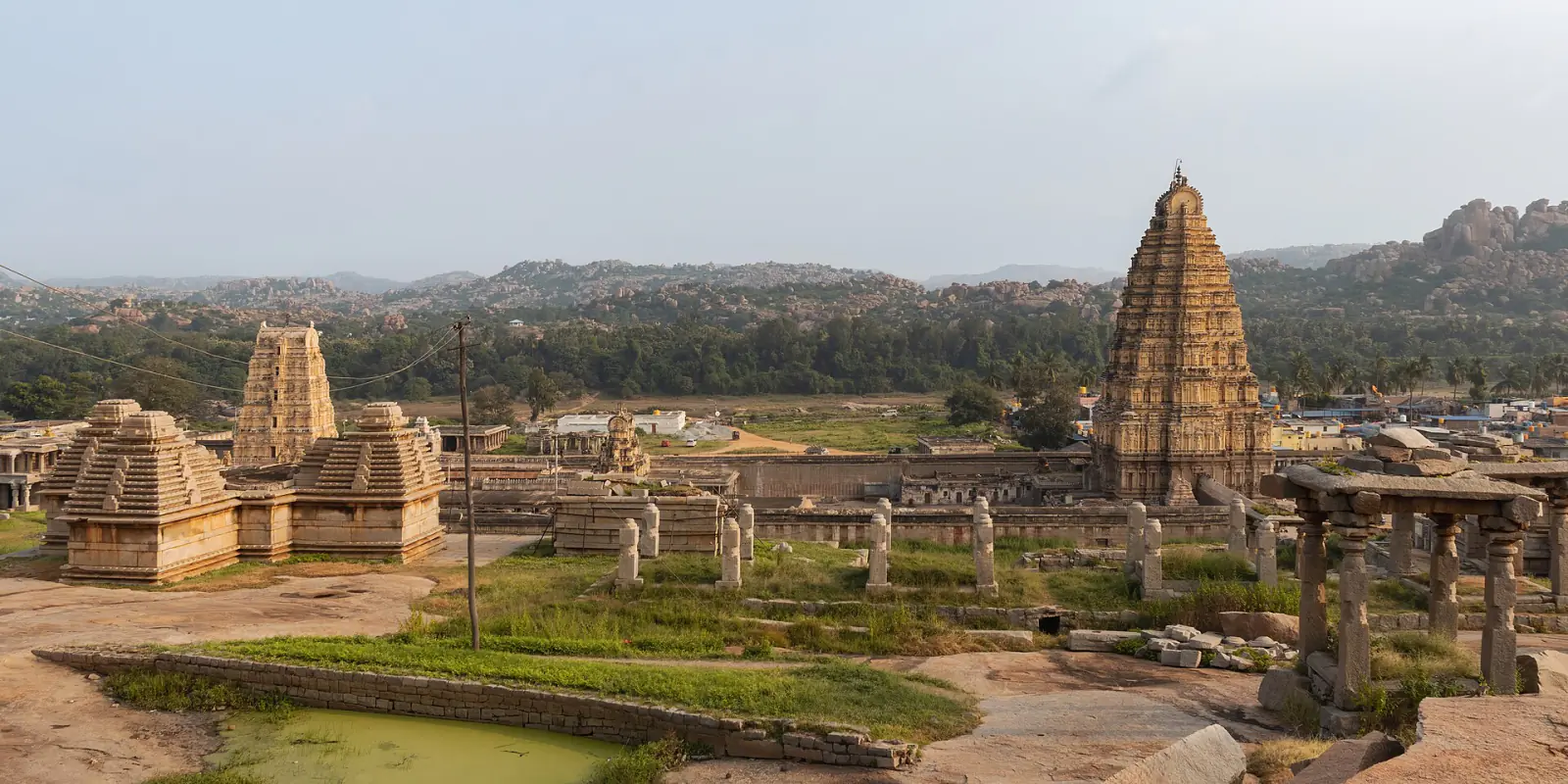
029
Capital of the Vijayanagara empire, sacked over five months in 1565. Once one of the world's largest cities by population.
Read entry
030
First-discovered Indus Valley site. Standardised brick sizes, weights, and seals across an empire larger than Egypt and Mesopotamia combined.
Read entry
031
Parthian-era walled city in the desert that twice withstood Roman sieges. Damaged by ISIS in 2015.
Read entry
032
Capital of the Hittite empire. Cuneiform tablets here recorded one of the earliest international peace treaties, with Ramesses II.
Read entry
033
Wealthier neighbour of Pompeii, buried in pyroclastic flow that carbonised wood, papyrus, and food. Some scrolls are still being read by particle accelerator.
Read entry
034
A Greek colony on Vis with a terraced city, harbour, walls, theatre, cemeteries, coins, and underwater finds across the protected bay.
Read entry
035
One of the best-preserved Roman provincial cities. The colonnaded Cardo still bears chariot ruts in its paving.
Read entry
036
A sixth-century Byzantine city at Caričin Grad with walls, churches, a palace, streets, baths, and a remarkably short urban life.
Read entryLargest Bronze Age Minoan site. Heavily reconstructed by Arthur Evans in the early 1900s, sometimes with creative liberties.
Read entry
038
Olmec ceremonial centre. Source of the colossal stone heads, carved from basalt hauled 60 km from the Tuxtla Mountains.
Read entry
039
Roman city under emperor Septimius Severus, who was born there. Spectacularly preserved, with security concerns limiting visitors.
Read entry
040
Inca estate on a 2,430-metre ridge. Abandoned during the Spanish conquest; never recorded by the conquistadors.
Read entry
041
Mesopotamian city-state whose palace archive contained 25,000 cuneiform tablets covering everything from diplomacy to recipes.
Read entryLast great Maya capital before the conquest. A small El Castillo-like pyramid stands at its centre.
Read entry
043
Tell with 26 layers of occupation. Strategic crossroads where Thutmose III fought the first battle recorded in detail.
Read entry
044
Zapotec and Mixtec religious centre. Walls covered in geometric mosaics built without mortar, each piece pressure-fitted.
Read entryIndus Valley city with grid streets, a covered drainage system, and the Great Bath. Its script remains undeciphered.
Read entry
046
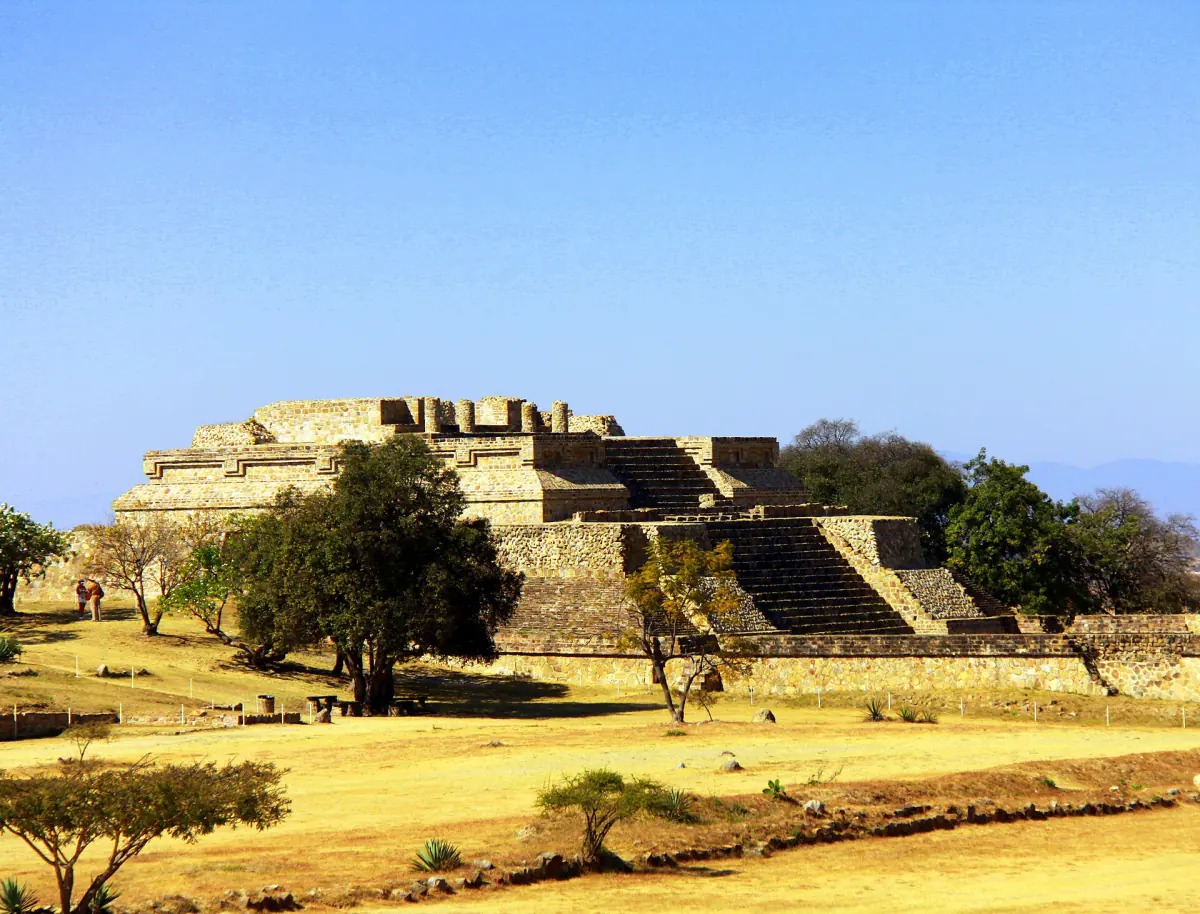
Zapotec capital, levelled atop a flattened mountaintop. The Danzantes carvings depict mutilated captives.
Read entry
047
Bronze Age citadel of the Achaeans. The Lion Gate is the oldest known monumental sculpture in Europe.
Read entry
048
The principal centre of the Histri, later rebuilt as a Roman city above Istria's Budava Bay, with walls, graves, baths, and basilicas still visible.
Read entry
049
Assyrian capital under Ashurnasirpal II. Famously bulldozed and dynamited by ISIS in 2015; reconstruction efforts ongoing.
Read entry
050
Last capital of the Neo-Assyrian empire, sacked by a coalition. Its library contained the Epic of Gilgamesh.
Read entry
051
Royal Inca estate of Pachacuti, then last stronghold of Manco Inca's resistance. Six pink granite monoliths weighing 50 tonnes each remain unfinished on Temple Hill.
Read entry
052
Rome's port, abandoned as the coastline shifted. Three-storey apartment blocks (insulae) survive intact.
Read entry
053
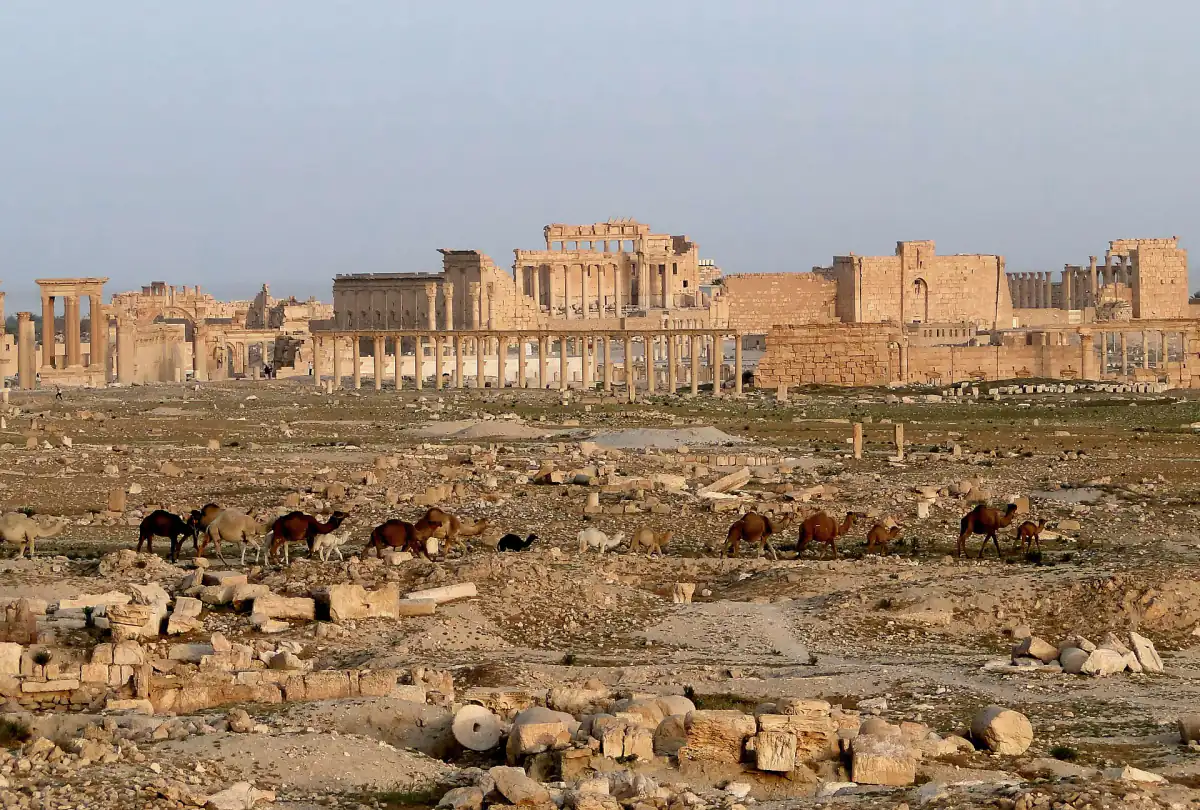
Caravan oasis between Rome and Persia. Significant portions destroyed in 2015–2017; partial restoration is ongoing.
Read entry
054
Cyrus the Great's capital, including his austere limestone tomb. Visited and reportedly preserved by Alexander.
Read entry
055
Hellenistic capital with the steepest theatre of the ancient world cut into the side of an acropolis. Library second only to Alexandria.
Read entry
056
Ceremonial capital of Achaemenid Persia. Burned by Alexander's army in 330 BCE, accidentally, drunkenly, or strategically depending on the source.
Read entryNabataean rock-cut city in the desert. Lost to the West for over a thousand years until Burckhardt entered it in 1812.
Read entryA Greek-founded city on the Taman Peninsula with an acropolis, public buildings, necropolises, underwater remains, and more than a thousand years of change.
Read entry
059
The Greek foundation beneath modern Stari Grad on Hvar, established by settlers from Paros and preserved in fragments under a continuously inhabited town.
Read entry
060
Inca citadel above the Sacred Valley with one of the largest known cliff cemeteries in the Americas, looted in colonial times.
Read entry
061
Sri Lanka's second medieval capital. The Gal Vihara houses four colossal Buddha images carved from a single granite face.
Read entry
062
Roman city sealed by Vesuvius. Casts of victims, made by pouring plaster into voids in the ash, are themselves now historical artefacts.
Read entrySmall Maya site holding the tallest free-standing stone monuments of the pre-Columbian Americas.
Read entry
064
Roman capital of Dalmatia. Birthplace of Diocletian and the largest Roman ruin field on the Croatian coast.
Read entry
065
The Roman city and fortress at the meeting of the Sava and Danube, with a legionary camp, streets, walls, baths, cemeteries, and layers beneath Belgrade.
Read entry
066
A fortified Bronze Age settlement in the southern Urals known for metalworking, complex burials, and some of the earliest well-attested spoke-wheeled chariots.
Read entryA Roman city on the Sava and imperial centre of the late empire, with a palace, circus, baths, villas, mosaics, and streets beneath Sremska Mitrovica.
Read entry
068
First capital of the Thai kingdom. The script developed here became the basis of modern Thai writing.
Read entry
069
A Greek-founded port at the mouth of the Don that connected the Bosporan world with peoples and trade routes of the northern Black Sea steppe.
Read entry
070
Crossroads of Persian, Greek, Mauryan, and Buddhist culture. Site of one of the earliest universities in the world.
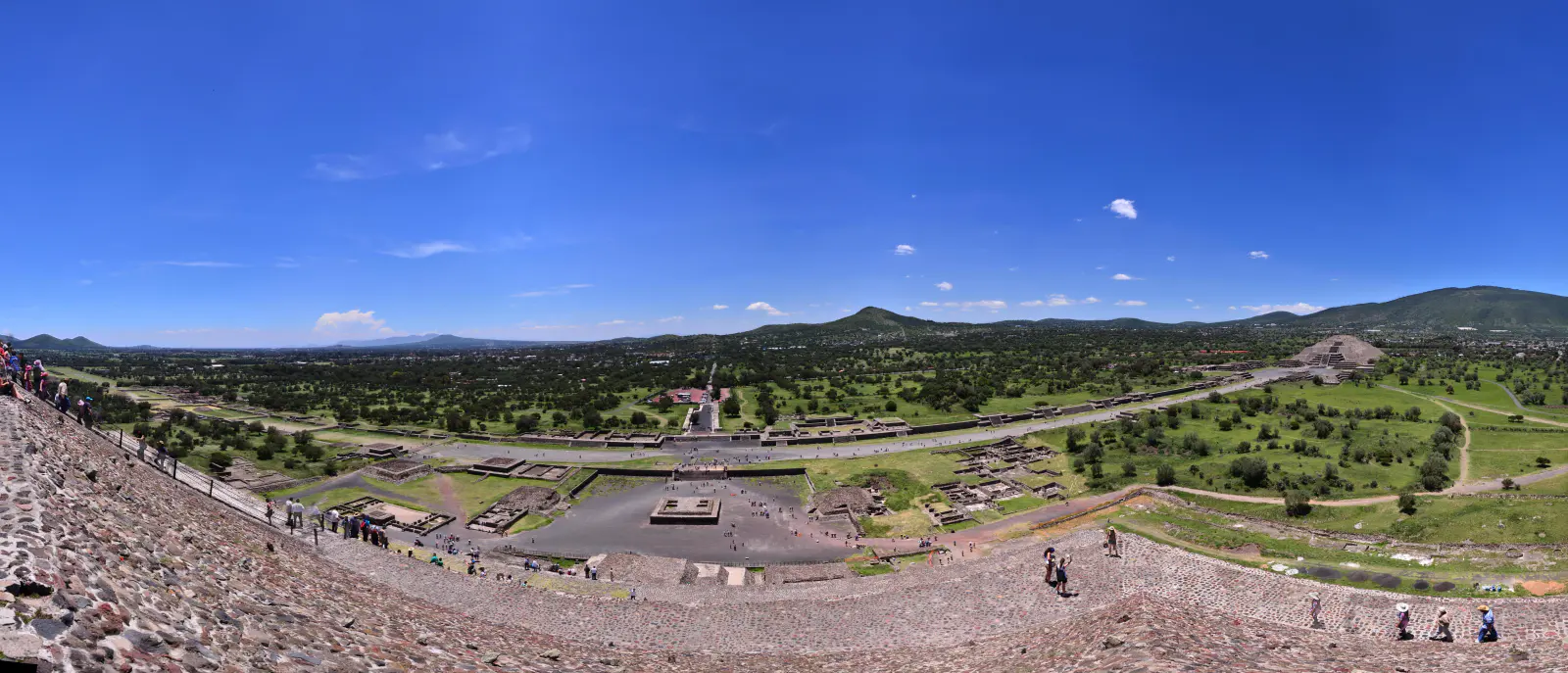
Read entryOne of the largest cities in the ancient Americas, organised around the Avenue of the Dead, massive pyramids, and planned residential districts.
Read entry
072
A major Maya political centre whose temples, palaces, plazas, reservoirs, and homes extend across the rainforest of northern Guatemala.
Read entry
073
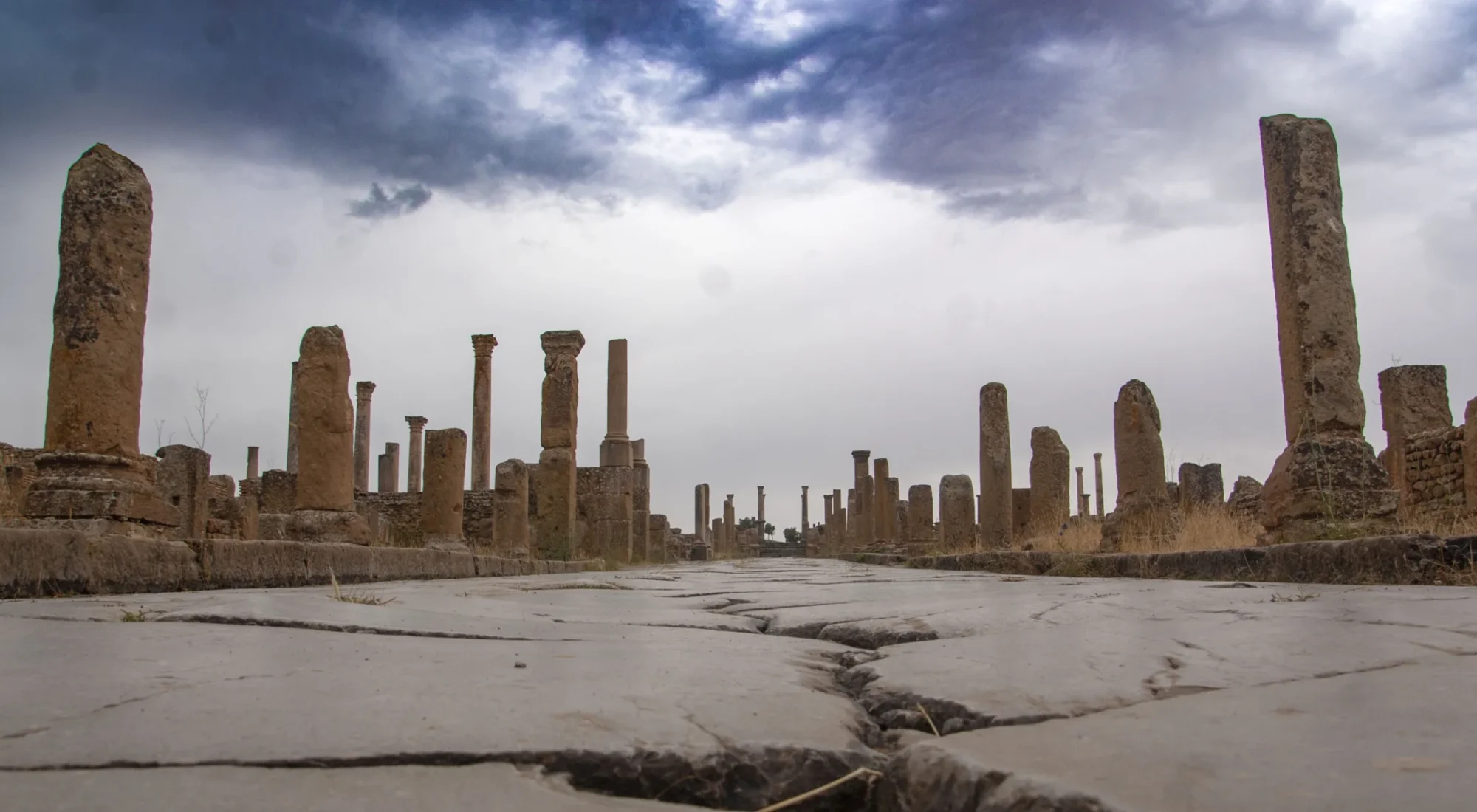
Trajan's perfectly grid-planned colony in the Aurès Mountains. Sands buried it for a thousand years, leaving the layout intact.
Read entry
074
Punic, Roman, and early-Christian coastal town that Albert Camus loved enough to write essays about.
Read entry
075
Pre-Inca capital on the Bolivian altiplano. The Gateway of the Sun is monolithic; the Akapana platform mound is the largest ever built in the region.
Read entry
076
Nine cities stacked on one hill. Heinrich Schliemann blasted through the lower layers in his hunt for Homeric Troy, destroying much of it.
Read entry
077
Walled Maya seaport on Caribbean cliffs. One of the last cities built and inhabited by the Maya.
Read entry
078
Bronze Age port whose archive of clay tablets revealed the Ugaritic alphabet, one of the earliest. Destroyed in the Late Bronze Age collapse.
Read entry
079
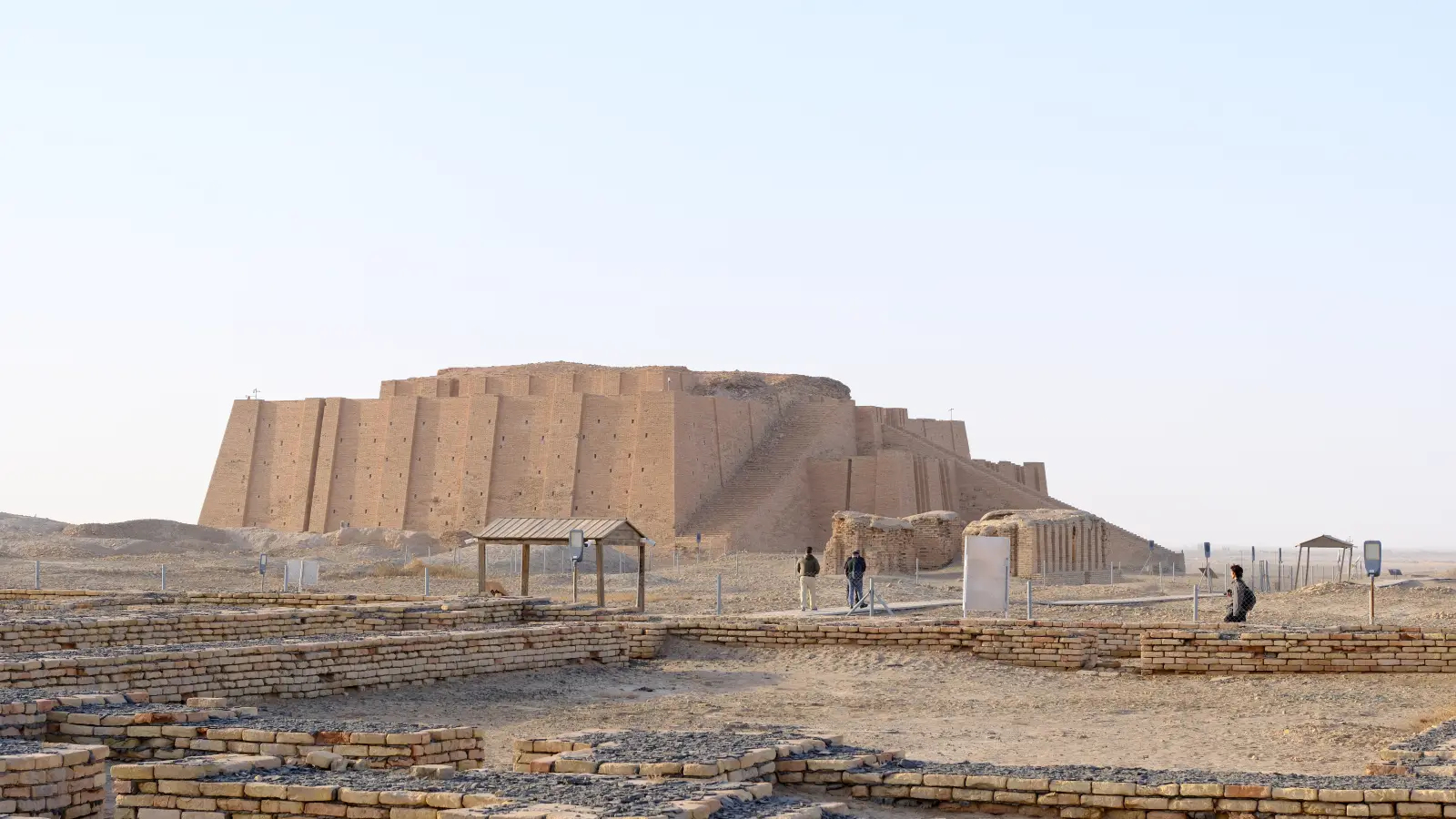
Sumerian city of the great ziggurat, traditionally linked to Abraham. Ziggurat partly restored under Saddam Hussein.
Read entry
080
Cradle of urban civilization. Home of Gilgamesh and the place where writing first emerged on clay tablets.
Read entry
081
A Roman city and legionary camp near the Danube, with an amphitheatre, baths, streets, frescoed tombs, and one of the region's largest excavated necropolises.
Read entry
082
Roman provincial capital in modern Morocco. Stone was scavenged in the 18th century to build nearby Meknes.
Read entry
083
Zapotec and Mixtec hilltop city in the Oaxaca Valley. Includes the Patio of the Triple Tomb and a fortified upper acropolis.
Read entry